Launch Your Career as an EV Diagnostics Technician.
Our intensive,6- 8-week Electric and Hybrid Vehicle (EV) Diagnostics Advanced Battery Systems and Cell Balancing Equipment. Also learn the latest EV ALTEL MAXI SYSTEM PRO EV SCANN DIAGNOSTIC SCANN TOOL. ALSO THE FLUKE Insulation Multimeter: Test Volt 1,000V DC/100V DC/250V DC/500V DC/50V DC. THIS advanced EV class prepares you for roles in the rapidly growing EV sector.
Contact to get started:
Phone: (313) 312-7377
Email: Info@blastdetroit.org
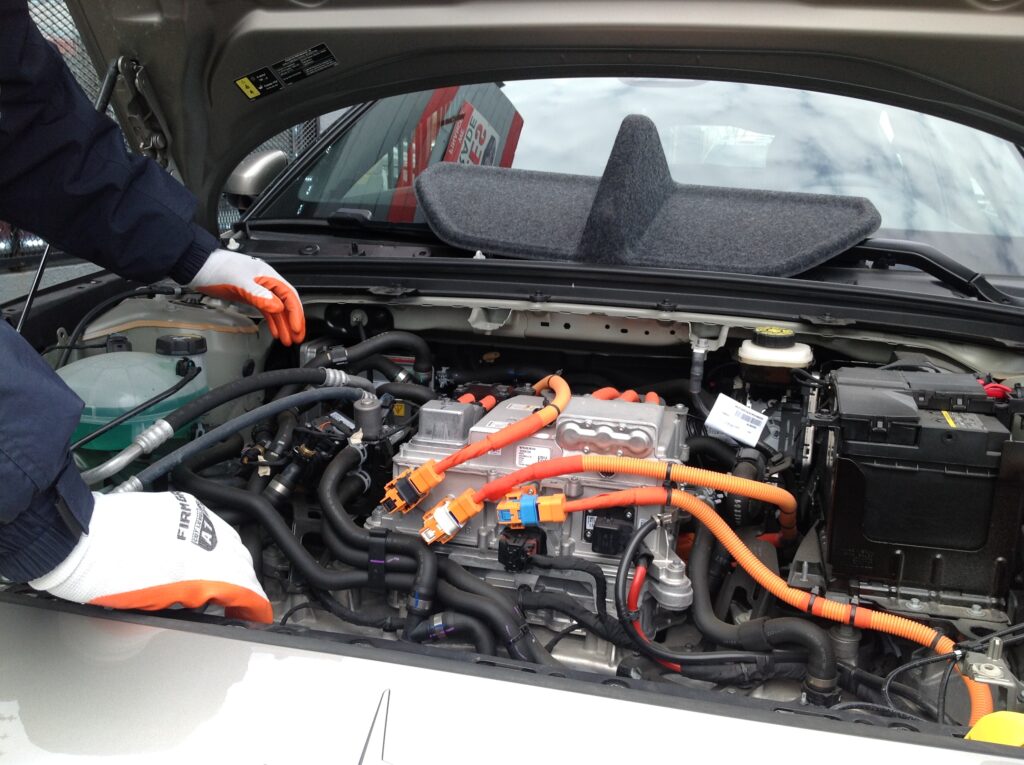
Primary High-Voltage Components
- Rechargeable Energy Storage System (RESS): The main traction battery pack is a 60 kWh lithium-ion assembly located under the vehicle floor (Recurrent Auto, 2025). It contains 288 individual cells arranged in 10 modules
- Single-Speed Electric Drive Unit: This housing contains the three-phase AC permanent magnet motor and the reduction gearset (transmission). It converts electrical energy from the battery into mechanical torque to drive the front wheels (eBay Motors, 2026).
- Power Inverter Module (PIM): Located in the motor compartment, the PIM (or Traction Power Inverter) converts the DC electricity from the battery into three-phase AC electricity to power the drive motor. It also handles regenerative braking by converting AC back to DC to charge the battery (GM OEM Parts Online, 2026).
- On-Board Charger (OBC): This module converts AC power from a Level 1 (120V) or Level 2 (240V) charging station into DC power to charge the high-voltage battery (ChargePoint, 2017).
- Accessory Power Module (APM): Often referred to as the DC-DC converter, this component reduces the high-voltage (350V+) DC from the traction battery to approximately 14V DC to power the vehicle’s 12V accessories and charge the standard 12V lead-acid battery (Seattle Automotive, n.d.).
- High-Voltage Air Conditioning Compressor: Unlike traditional vehicles, the Bolt uses an electric motor driven by the HV battery to run the A/C compressor, allowing the climate control to function without an idling engine.
- High-Voltage Coolant Heater: This resistive heater uses power from the HV battery to warm the cabin and maintain the battery pack’s thermal management system in cold weather.
GENESIS EV G60 VS, LYRIQ SPORT

An early-1900s electric automobile with a mercury arc rectifier, once used to charge EVs. The original parent company, the Anderson Carriage Company, was founded in 1884. However, the business underwent several transformations, and the official entity name changed over time: The Detroit Electric Car Company operated a major historical facility on East Grand Boulevard, distinct from its main factory on Clay Street.
Located at 112 East Grand Boulevard (near the corner of Jefferson Avenue, just a block from the Belle Isle Bridge), this building was Detroit Electric Charging Station
About the Building
Purpose: Built in 1909, this was an early public and commercial charging garage. Because many wealthy customers lived in nearby affluent enclaves like Indian Village, they utilized this station to have their vehicles serviced, maintained, and charged overnight.
1919 / 1920: The automotive business split from the body-building division and officially incorporated as The Detroit Electric Car Company
1907: The company began manufacturing its famous electric vehicles under the brand name Detroit Electric.
1911: To reflect its primary focus on electric cars, it was renamed the Anderson Electric Car Company.